Originally published in Yoga Journal Magazine.
Geeta Iyengar reviewed and approved this sequence. Please note that you if your sinuses are completely blocked, you should avoid the inversions. You can view a copy of the print edition article here. Hope it helps!
View the Hebrew translation here.
Sweet Relief – A Home Practice Sequence
Iyengar yoga is sometimes called the yoga of alignment, but it’s about more than muscles and bones. It is wholly dedicated to finding ease in body, mind, and breath, even in difficult situations. As such, the practice is at its best when applied to a real-life therapeutic problem, even one so simple and common as nasal congestion. Iyengar Yoga teacher Marla Apt designed this particular sequence to address the the stuffy noses, swollen sinuses, and headaches associated with colds and seasonal allergies.
In all of the poses, it’s crucial to keep the shoulder blades moving away from your head and forward toward your chest. When the shoulder blades fall into place, you will feel a sense of spaciousness and relaxation in the neck and shoulder region, which will encourage the sinuses to open. Then you can focus on draining the sinuses with inverted poses. “While the upper back and shoulder blades work, the head, neck, throat, and eyes should remain relaxed. Look for a feeling of calm and softness,” Apt says.
Since deep or forced breathing can aggravate already inflamed sinuses, breathe normally as you do this practice. Expect this sequence to provide immediate relief, which you might feel in the form of less pressure in your head and an increased sense of spaciousness behind your eyes.
during the sequence. – Andrea Ferretti
Wrap It Up For Halasana (Plow Pose) and Savasana (Corpse Pose), you can wrap your head with a non?stretchy bandage (you can often find the lightweight Indian ones at Iyengar Yoga studios). The light presence of the bandage encourages the facial muscles to relax, but if wrapped too tightly it can add pressure. Unroll the bandage around your forehead down to eyebrow level and around the back of your skull. Wrap it lightly so that it supports the forehead but doesn’t put pressure on the eyes. Remove the bandage if you find breathing difficult.
After you finish
Rest. Lie on your back in Savasana. With your arms by your sides, palms up, press your forearms into the floor and pull your shoulder blades away from your neck to roll the outer edges of your shoulders to the floor, and turn your upper arms out. The back of the neck should feel long, as though it were lengthening away from the feet. If the head tilts backward, place a blanket under? neath the head and neck. The chest should feel broad, but with the throat and neck relaxed. Let the arms and legs relax com? pletely.
Home practice Sequence:
With the exception of chatush padasana (Four-Footed pose, which you can hold from 20 seconds to 1 minute), each pose in this sequence can be held for up to 5 minutes.
 1 Adho Mukha Virasana (Downward Facing Hero’s Pose or child’s pose) Sit on your heels with your knees apart and big toes touching. Extend your arms forward and rest your head on the floor. If your head does not reach the floor with ease, put a blanket or two underneath the forehead for sup? port. Lengthen the buttocks back while extending the chest and ribs forward. Keep the neck soft and the shoulders away from the ears.

2 Adho Mukha Svanasana (downward-Facing dog pose) With your hands and knees on the floor, place a block underneath your chest. Straighten the legs and lift into Downward?Facing Dog. Let your neck release down so that your head can rest on the support. If your head doesn’t reach the block, place a bol? ster or several folded blankets underneath it. While the arms, upper back, and torso work to lift away from the floor, keep the neck, throat, and face soft and relaxed.
 3 Uttanasana (Standing Forward bend) Separate the feet wider than hip?width apart and bend forward. Place the crown of your head on a support (try blocks or even a chair). Hold your ankles with your hands and separate your elbows. Even though your head is resting on the prop, keep your weight in your feet. The neck should feel
  long and the chest broad.
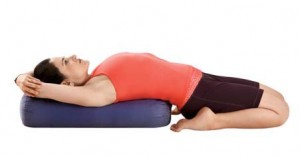
4 Supta Virasana (reclining Hero pose) Sit in Virasana (Hero Pose). Lie back on a bolster. If your knees splay apart or hurt, use more support under your back. If your head tilts backward, place a blanket under? neath it. Extend your arms overhead and clasp your elbows with your hands.
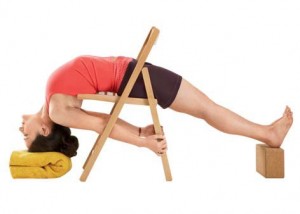 5 Dwi Pada Viparita Dandasana (two-legged inverted Staff pose) Sit backward on a folding chair, with your
legs threaded through the opening above the chair seat. Lie back, placing your upper back on the edge of the chair seat. Extend the legs and place your heels on a block. Pull on the chair with your arms to open your chest. Rest the crown of your head on a prop, keeping the neck relaxed. Bend your knees and lift your torso up to come out of the pose.
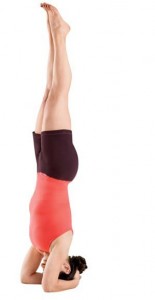 6 Salamba Sirsasana (Supported Headstand) If this pose is new for you, do not attempt it without the guidance and supervision of an experienced teacher. It is not for those with neck injuries. Try it at a wall if you cannot balance in the middle of the room. Place your forearms on the floor, with your elbows directly underneath your shoulders, and then interlock your fingers. Place your head on the floor between your hands. Straighten your legs and walk your feet closer to your head. Gently lift your legs up into Headstand. Keep the shoulders lifted while you come down, then rest your head on the floor for a minute in Balasana.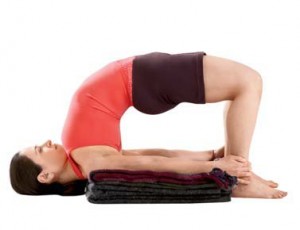
7 Chatush Padasana (Four-Footed pose) Place three blankets on a mat and lie over the blan? kets with your shoulders in line with their top edges. With your feet hip?width apart, bend your knees and clasp your ankles with your hands, place and hold a belt around the ankles, or grasp the sides of your mat. Press your heels into the floor, lift your pelvis up toward the ceiling, and roll the outer edges of your shoulders down into the floor. Lift the upper back away from the floor and open the chest.
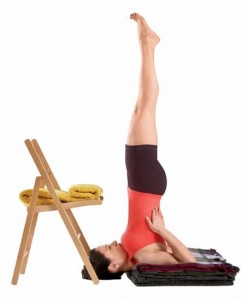 8 Salamba Sarvangasana (Supported Shoulderstand) Before coming into this pose, place a chair with a rolled blanket or a bolster behind your blankets. Then lie back on the blankets and lift your torso and legs up toward the ceiling directly above your shoulders. With your elbows bent, cradle your upper back (near the shoulder blades) with your hands; don’t let your elbows splay wide apart. Relax the neck and throat and look at your chest as you walk your hands further down your back toward the floor.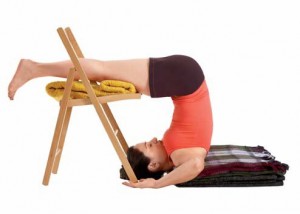
9 Halasana (plow pose) From Salamba Sarvangasana, take your legs overhead and rest your thighs on the support. Relax your arms by the sides of your head. Keep the throat passive and eyes, temples, and cheeks soft.